
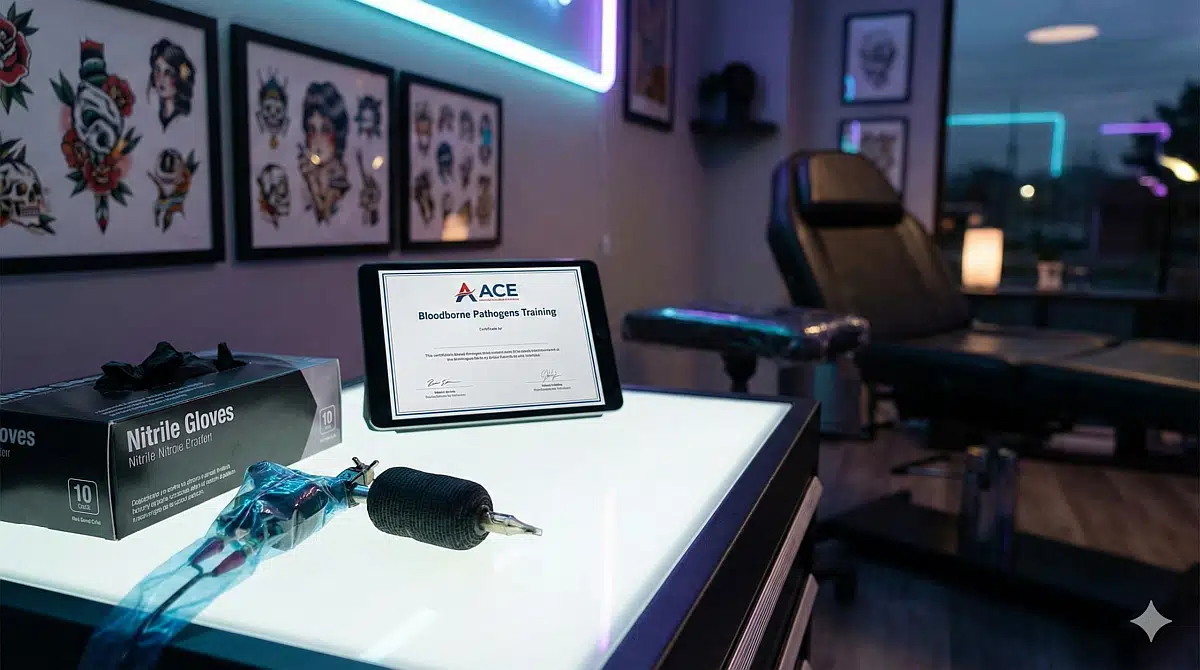

Click to watch the full training video on YouTube.
Immediate Response to Accidental Cuts
When an accidental cut occurs, the Oregon Salon Blood Exposure Plan requires immediate action. First, you must stop the service immediately and inform the client of the incident. The practitioner must wash their hands and the injured area with soap and water or use an appropriate antiseptic. For minor cuts, apply a sterile bandage to the wound. It is vital to remember that all single-use items contaminated with blood, such as cotton balls, tissues, or neck strips, must be placed in a double-bagged plastic container and then disposed of in a covered waste receptacle. Any multi-use tools that come into contact with blood must be cleaned and disinfected with an EPA-registered disinfectant that is tuberculocidal or effective against HIV and HBV.
OSHA Compliance and Record Archiving
OSHA’s Bloodborne Pathogens Standard (29 CFR 1910.1030) serves as the legal backbone for salon safety in Oregon. Compliance involves more than just immediate cleanup; it requires ongoing training and meticulous record-keeping. ACE Bloodborne Pathogens Training simplifies this administrative burden by offering 5-year cloud record archiving for all students. This ensures that your certificates and training logs are always accessible during a state inspection or OSHA audit. Our 100% video course is designed to be efficient, engaging, and thorough. By using the discount code **ace10**, professionals can secure their training for only $12.95, ensuring both financial and regulatory peace of mind.
Maintaining a Safe Salon Environment
Preventing exposure is always preferable to managing an incident. A robust Oregon Salon Blood Exposure Plan includes the use of Personal Protective Equipment (PPE), such as disposable gloves, whenever there is a risk of contact with blood or body fluids. Practitioners should regularly inspect their tools for sharp edges that could cause accidental nicks and ensure that all workstations are kept clean and organized. Education is the strongest tool in your prevention arsenal. By staying current with the latest infection control protocols, you demonstrate a commitment to excellence that builds trust with your clientele and keeps your business running smoothly within Oregon’s legal framework.
Continuing Education FAQ
Q: Does Oregon require a written Blood Exposure Plan for salons?
A: Yes, under OSHA regulations, any workplace where employees may be exposed to bloodborne pathogens must have a written Exposure Control Plan that is updated annually.
Q: How long are my training records kept?
A: ACE Bloodborne Pathogens Training provides 5-year cloud record archiving, making it easy to retrieve your certification if you are audited by the state or OSHA.
Q: Is this course accepted for Oregon cosmetology professionals?
A: Yes, our BBP course is designed to meet OSHA requirements which are the standard for bloodborne pathogen safety in Oregon salons and shops.
Official Compliance & Licensing:
- Authorized Provider: ACE Continuing Education – Oregon Salon Blood Exposure Plan
- State License:
- Issuing Agency: OSHA
- Product Overview Page: View Oregon Salon Blood Exposure Plan Course Details
- Training Status: Statewide Accepted Certification