
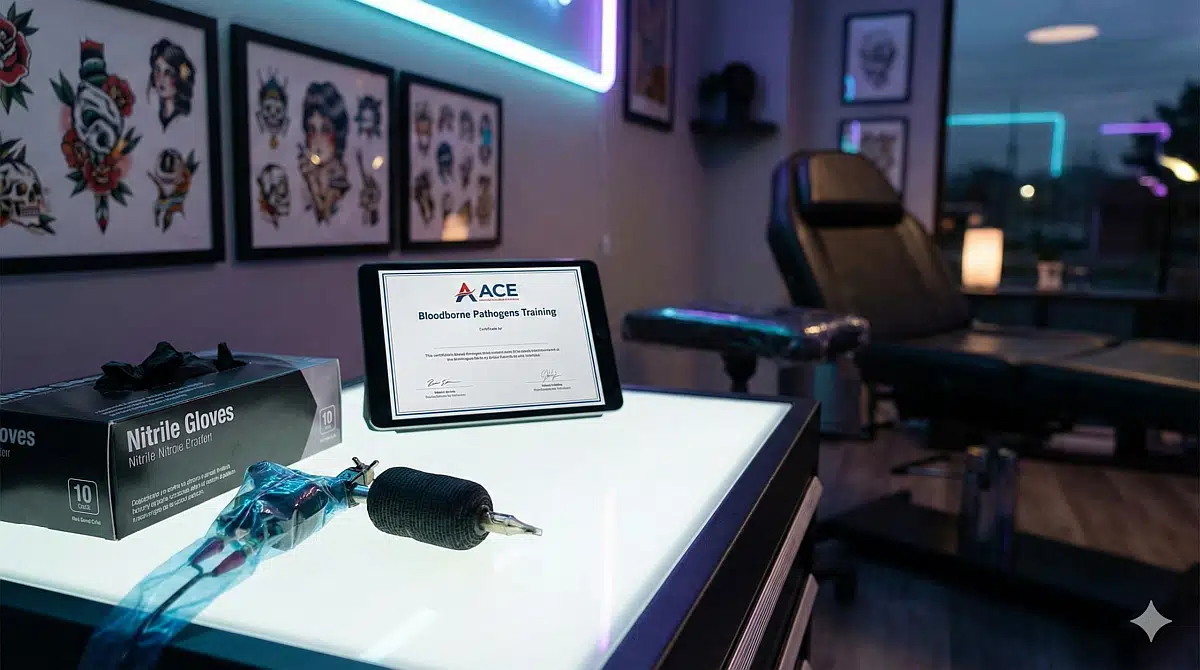

Click to watch the full training video on YouTube.
Understanding Ohio Health Board Requirements
The first step in navigating how to get a piercing license in Ohio is identifying your local health district’s specific rules. Each county or city health department oversees the inspection and permitting of body art businesses. You must be at least 18 years old and typically work under the supervision of an experienced artist if you are just starting. The facility where you practice must have a valid business permit, which involves passing annual inspections that check for proper sterilization equipment, handwashing stations, and biohazardous waste disposal protocols. Ohio law requires that the shop owner maintains records for all artists, including proof of their safety training and vaccinations.
Mandatory Infection Control and OSHA Training
State guidelines emphasize that all body art professionals require annual infection control hours to maintain compliance. Specifically, OSHA-compliant Bloodborne Pathogens (BBP) training is the industry standard required for those working with needles and bodily fluids. This training covers essential topics like needle stick safety, personal protective equipment (PPE), and the proper handling of hazardous materials to prevent the spread of HIV, Hepatitis B, and Hepatitis C. ACE Bloodborne Pathogens Training offers a comprehensive, state-accepted course for just $12.95. For a limited time, you can use the osha coupon code ace20 to reduce the cost to only $8.00, making it an affordable way to secure your required certification.
Completing the Licensing Roadmap
Once you have completed your infection control training, you must submit your certificate to your employer and, in many cases, your local health department as part of the facility’s annual renewal process. Some jurisdictions require a formal application for an individual practitioner permit, while others register artists under the facility’s umbrella permit. Always maintain a digital and physical copy of your BBP certificate at your workstation. Regular updates to your training ensure you stay current with evolving safety standards and protect your career from administrative penalties or closures during unannounced health inspections. Staying compliant is not just a legal hurdle; it is a commitment to the health of the Ohio body art community.
Continuing Education FAQ
Q: How often do I need to renew my infection control training in Ohio?
A: Ohio health boards generally require body art professionals to complete bloodborne pathogens and infection control training annually to remain compliant with state and OSHA safety standards.
Q: Can I take my piercing safety training online?
A: Yes, online courses that meet OSHA 29 CFR 1910.1030 standards are widely accepted by Ohio health departments for individual practitioner compliance.
Q: What happens if I work without a permit in Ohio?
A: Operating without proper health board approval or valid safety certifications can lead to heavy fines, shop closure, and potential legal action against the individual practitioner.
Official Compliance & Licensing:
- Authorized Provider: ACE Continuing Education – How To Get A Piercing License In Ohio
- State License:
- Issuing Agency: OSHA
- Product Overview Page: View How To Get A Piercing License In Ohio Course Details
- Training Status: Statewide Accepted Certification