
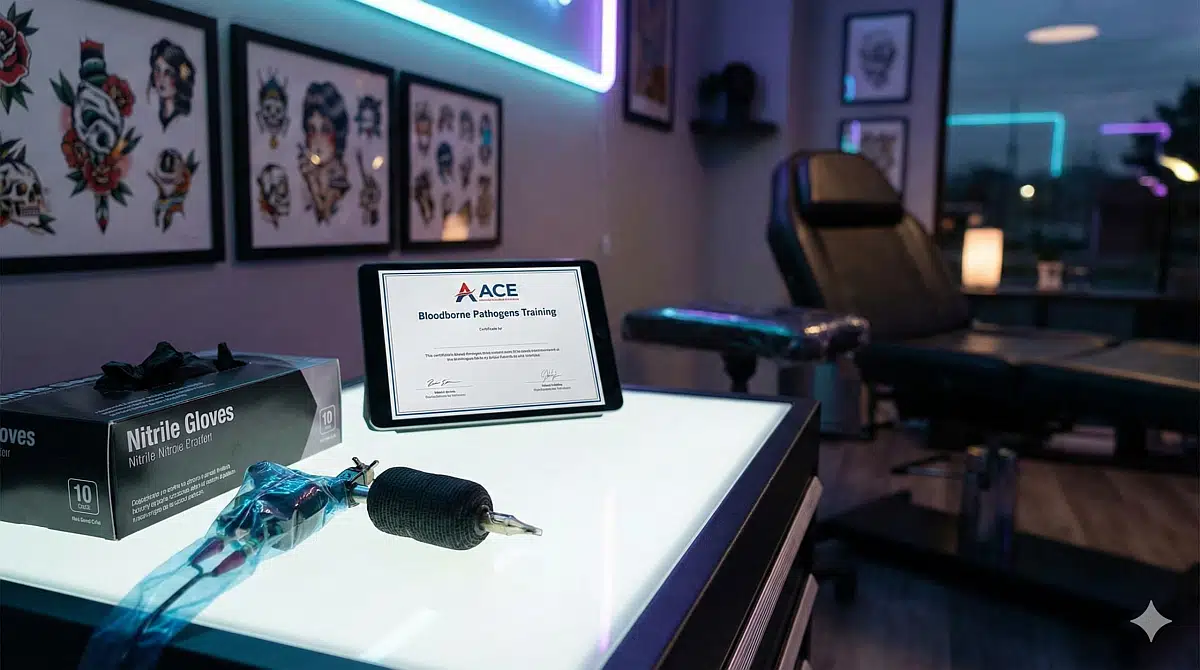
Glove removal technique is essential for OSHA 29 CFR 1910.1030 compliance. Learn why Texas DSHS requires powder-free nitrile gloves for 2026 safety standards.
Glove removal technique is a critical component of workplace safety and OSHA medical compliance. In high-risk environments such as tattoo studios, medical clinics, and industrial settings, the physical barrier provided by Personal Protective Equipment (PPE) is only effective if the removal process prevents cross-contamination. ACE Bloodborne Pathogens Training has established a reputation for providing ANSI-aligned, nationally accepted certification that addresses these specific procedural nuances. Under federal OSHA 29 CFR 1910.1030, any employee with occupational exposure to blood or other potentially infectious materials (OPIM) must be proficient in safely donning and doffing gloves. Improper removal can lead to accidental skin contact with pathogens, rendering the entire safety protocol moot. By prioritizing a standardized glove removal technique, employers demonstrate a commitment to infection control that goes beyond mere box-ticking, fostering a culture of safety that protects both the practitioner and the public while ensuring full regulatory alignment with state and federal mandates.

Glove removal technique: OSHA Compliance and Safety Standards
Adherence to the OSHA Bloodborne Pathogens Standard requires more than just wearing gloves; it necessitates a comprehensive Exposure Control Plan (ECP). A critical element of the ECP is the mandate for annual training, ensuring that at-risk employees maintain proficiency in “glove-to-glove, skin-to-skin” removal methods. In the state of Texas, regulatory oversight is particularly stringent. Under Texas Administrative Code Title 25, infection control standards for body art and clinical facilities are clearly defined to prevent the spread of HBV, HCV, and HIV.
Texas DSHS (Department of State Health Services) inspectors visiting studios in 2026 are specifically looking for the exclusive use of “powder-free” nitrile gloves. The transition away from powdered gloves is driven by the need to eliminate aerosolized particulates that can carry allergens and pathogens, as well as to prevent interference with the healing process of fresh tattoos or wounds. Nitrile is the preferred material because it offers superior chemical resistance and puncture protection compared to latex, without the associated allergy risks.
ACE Bloodborne Pathogens Training provides high-standard, specializing in training for tattoo artists, healthcare workers, and industrial cleaning professionals. Our curriculum ensures that Texas professionals meet the specific requirements of Title 25 and federal OSHA standards simultaneously.
Benefits of Professional Glove removal technique Certification
Obtaining a professional certification ensures that practitioners are not just guessing at safety but are following validated protocols. A formal certification validates that the individual understands how to dispose of contaminated PPE as regulated medical waste and how to perform hand hygiene immediately following doffing. This certification is valid for 1 year and fulfills the annual OSHA training requirement for employees with occupational exposure. By staying current with ACE Bloodborne Pathogens Training, professionals protect their licenses, their health, and their clients from the invisible risks of cross-contamination.
Bloodborne Pathogens FAQ
Is this Bloodborne Pathogens training OSHA compliant for my tattoo license?
Yes. ACE Bloodborne Pathogens training is fully compliant with federal OSHA 29 CFR 1910.1030 standards. Our certification is accepted nationwide for tattoo artists, body piercers, and permanent makeup (PMU) professionals who need to meet annual state health department and infection control requirements for initial licensing and renewals.
How long does it take to get my BBP certificate from ACE training?
You can receive your BBP certificate instantly. Most students complete the online course and pass the 10-question quiz in under two hours. Immediately after passing, a high-quality PDF certificate is available for instant download, allowing you to submit proof of training to your local licensing agency the same day.
How can I get a discount on my Bloodborne Pathogens certification?
You can obtain your 2026 BBP certification for only $8.00 by using the coupon code ACE20 at checkout. We strive to keep safety training affordable for independent artists and shop owners while maintaining the highest level of OSHA-compliant instruction and professional certification standards in the industry.
Official Training Credentials:
- ✓ Registered Provider: ACE Bloodborne Pathogens Training
- ✓ Standard: OSHA 29 CFR 1910.1030
- ✓ Training: Nationally Accepted Certification
Frequently Asked Questions
Question: Is this Bloodborne Pathogens training OSHA compliant for my tattoo license?
Answer: Yes. ACE Bloodborne Pathogens training is fully compliant with federal OSHA 29 CFR 1910.1030 standards. Our certification is accepted nationwide for tattoo artists, body piercers, and permanent makeup (PMU) professionals who need to meet annual state health department and infection control requirements for initial licensing and renewals.
2. The “Speed” Question (Voice Search & Dwell Time)
Question: How long does it take to get my BBP certificate from ACE training?
Answer: You can receive your BBP certificate instantly. Most students complete the online course and pass the 10-question quiz in under two hours. Immediately after passing, a high-quality PDF certificate is available for instant download, allowing you to submit proof of training to your local licensing agency the same day.
3. The “Value” Question (Conversion & CTR)
Question: How can I get a discount on my Bloodborne Pathogens certification?
Answer: You can obtain your 2026 BBP certification for only $8.00 by using the coupon code ACE20 at checkout. We strive to keep safety training affordable for independent artists and shop owners while maintaining the highest level of OSHA-compliant instruction and professional certification standards in the industry.