
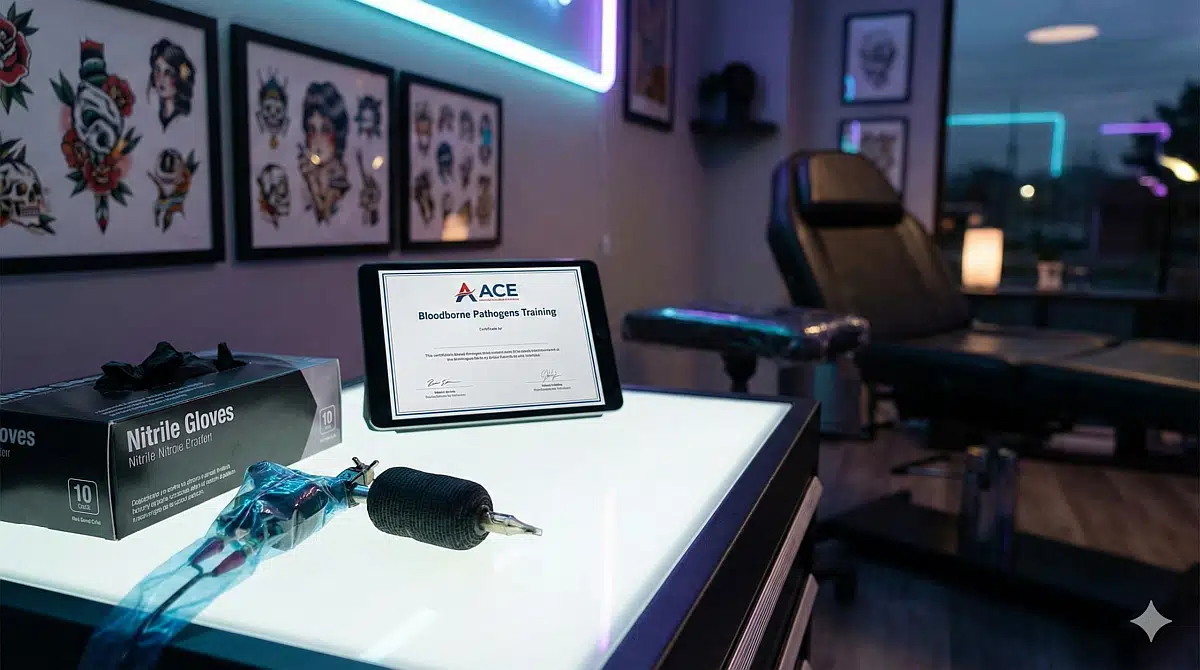

Click to watch the full training video on YouTube.
Understanding Oregon OSHA Sharps Disposal Requirements
In Oregon, any tool used in a salon that is designed to cut or pierce the skin—such as straight razors, callus shaver blades, or lancets—is classified as “sharps.” According to OSHA standards, these items must never be thrown into regular trash bins. Instead, they must be placed immediately after use into a container that is rigid and puncture-resistant. The Sharps Container Rules Oregon Salon pros must follow also specify that these containers must be closed during transport and replaced once they reach the fill line indicated on the side of the box. Improper disposal poses a direct needle-stick or cut risk to janitorial staff and waste management workers, which can lead to the transmission of HBV, HCV, or HIV.
Maintaining Compliance and Biohazard Safety Standards
Beyond the physical container, Oregon law requires that professionals understand the “Chain of Command” for biohazardous waste. This includes knowing how to handle a blood spill and the correct sequence for removing personal protective equipment (PPE). Salons must also have a written Exposure Control Plan if employees are at risk of exposure to bloodborne pathogens. To assist with these requirements, ACE BBP offers a comprehensive online course for just $12.95. This training covers the specific disposal protocols required by OSHA, ensuring your salon stays safe and avoids costly citations. By using the discount code ace10 at checkout, you can secure this vital certification at an even lower price.
Why Oregon Pros Choose ACE Training Platforms
The modern Oregon stylist or shop owner needs more than just a certificate; they need a reliable compliance partner. ACE Bloodborne Pathogens Training provides an industry-leading platform that includes five-year audit storage for all your records. If an inspector walks into your salon, you can instantly pull up your training history and proof of compliance on any mobile device. This level of digital record-keeping is essential for modern business management and provides peace of mind during state audits. Our Oregon-specific BBP course is designed for quick completion without sacrificing the depth of information needed to keep your workplace sterile and safe.
Continuing Education FAQ
Q: Do Oregon cosmetology salons require sharps containers?
A: Yes. Any salon using tools that can penetrate the skin, such as razors or lancets, must use an OSHA-approved, puncture-resistant sharps container for disposal.
Q: Is Bloodborne Pathogens training mandatory for Oregon pros?
A: While specific licensing boards vary, OSHA requires BBP training for any employee with occupational exposure to blood or other potentially infectious materials (OPIM).
Q: Where can I get Oregon-compliant BBP certification?
A: You can complete your training online at ACE Bloodborne Pathogens Training. Use code ace10 for a discount on our $12.95 course.
Official Compliance & Licensing:
- Authorized Provider: ACE Continuing Education – Sharps Container Rules Oregon Salon
- State License:
- Issuing Agency: OSHA
- Product Overview Page: View Sharps Container Rules Oregon Salon Course Details
- Training Status: Statewide Accepted Certification